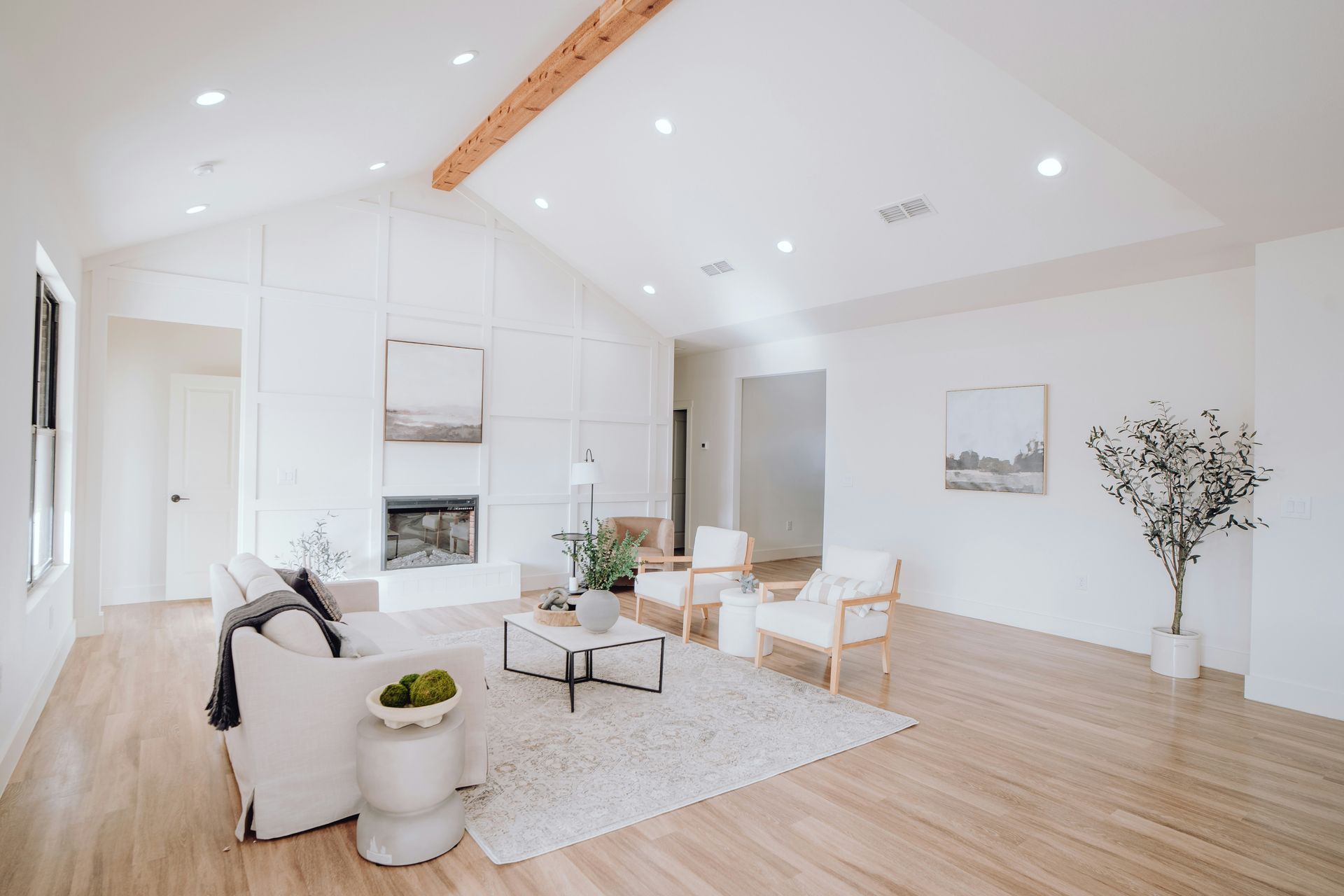
Hidden Costs of Buying New Construction in Warrensburg MO
Videos of New Homes in Warrensburg, MO
New construction homes come with real advantages, but the advertised price is rarely the complete picture. Here is what to budget for beyond the base price so your move to Warrensburg goes the way you planned.
There is a lot to like about buying a brand-new home. Nobody else has lived there. The layout reflects how people actually live today. The systems are modern, the insulation is better, and you have a builder warranty standing behind the workmanship. For buyers relocating to Warrensburg from another state or arriving on a PCS timeline, new construction also offers a predictable product, which matters when you are making a major purchase without the ability to watch a home through the seasons.
The appeal is real. So is the catch: the price on the builder's website is almost never the price you actually pay. Upgrades, landscaping, HOA fees, closing costs, and a handful of items that buyers assume are included but are not can add thousands of dollars to what you spend in the first year. None of these costs make new construction a bad decision. But going in without accounting for them leads to financial stress that solid preparation would have prevented.
This guide covers every significant expense beyond the base price so you can build a complete, realistic budget before you commit.
1. Builder Upgrades That Can Quickly Add Up
The home you tour in the model center is not the home you get at the base price. Model homes are built to sell, and builders stage them with upgraded flooring, quartz countertops, custom cabinetry, premium fixtures, recessed lighting packages, and appliance suites that are not standard. The model is meant to show you what is possible, not what is included.
Standard features vary by builder and by community, and the gap between standard and model-home can be significant. A kitchen with standard countertops and basic cabinet pulls looks nothing like the kitchen you fell in love with on the tour. Buyers who upgrade to match what they saw can easily add $10,000 to $30,000 or more to the purchase price, depending on the scope of selections.

The best way to avoid being caught off guard is to ask for a written list of standard included features before you choose a floor plan. Go line by line through flooring, countertops, cabinetry, lighting, plumbing fixtures, and appliances. Decide which upgrades genuinely matter to you and which ones you can live without or add later. Prioritize upgrades that are difficult or costly to change after closing, flooring and countertops, over items you can update down the road.
2. Landscaping, Fencing, and Outdoor Finishing Costs
Most builders in Warrensburg complete the minimum exterior work required by the development agreement, which typically includes grading, seeding or sodding the front yard, and perhaps some foundation plantings. What it often does not include is a finished backyard, a fence, a patio, a deck, trees, shrubs, or an irrigation system.
For buyers coming from a home that already had a landscaped yard, this can be a surprise. A completely unfinished backyard on a new construction lot is essentially a flat expanse of new sod or bare dirt. Making that space actually usable, fenced for kids or dogs, finished with a patio for outdoor dining, planted with trees and perennials, can run anywhere from a few thousand dollars for basic work to $15,000 or more for a comprehensive outdoor setup.
Before you close, walk the lot and understand exactly what the builder will complete. Ask for specifics: will the backyard be sodded or seeded? Is there a patio, or just a back door opening onto bare ground? If fencing is permitted by the HOA, what is the spec and cost? Building these expenses into your first-year budget rather than discovering them after move-in keeps the financial picture accurate.
3. Property Taxes and Homeowners Insurance
New construction home taxes can be lower than expected in year one, then adjust meaningfully once the home is fully assessed. In Missouri, property taxes are calculated based on assessed value, which for residential property is 19% of market value. A newly built home may be assessed on the land value alone in the first year, then reassessed to reflect the completed home in year two. That shift can create a noticeable change in your monthly escrow payment.
Missouri property tax rates are lower than in many states, which is one of the things that makes Warrensburg genuinely affordable for relocating buyers. But the specific rate depends on the county and applicable levies, which can include school, city, and special district assessments. Rather than relying on the builder's monthly payment estimate, calculate your own property tax estimate using the specific address and the Johnson County Assessor's current rates. Your lender can also help you model this.

Homeowners insurance on new construction is generally favorable, modern construction standards and newer systems mean lower risk and often lower premiums than an equivalent older home. Get your own quotes rather than using the builder's preferred insurer as a default. Coverage details and deductibles vary, and a local insurance agent familiar with Warrensburg and Johnson County can help you find the right policy for the specific home.
4. Closing Costs and Builder Financing
Closing costs on a new construction purchase work the same way as a resale transaction in most respects, but the specifics are worth understanding before you sit down at the table. On a conventional loan, closing costs typically run 2 to 4 percent of the loan amount. On a $280,000 purchase, that is $5,600 to $11,200, covering lender origination fees, title services, appraisal, prepaid homeowners insurance, prorated property taxes, and initial escrow deposits.
Many builders offer incentives to use their preferred lender, closing cost credits, rate buy-downs, or upgrade packages tied to financing through a specific partner. These incentives are real and can be valuable, but they come with conditions. The preferred lender's interest rate or loan terms may not be as competitive as what you would find shopping independently. A lower rate over 30 years can easily outweigh a closing cost credit paid once. Compare the full loan terms, not just the upfront incentive, before you commit to builder financing.
For VA loan buyers, the fee structure is different: VA loans cap many of the fees buyers can be charged, though they do not eliminate closing costs entirely. Confirm your full cash-to-close estimate with your lender well before closing so you are not scrambling in the final days before the transaction.
5. HOA Fees and Community Restrictions
Some Warrensburg new construction communities have homeowners associations and some do not, and the difference matters significantly to your monthly budget and how you can use your property.
At Bryson Lake on DD Highway, for example, the HOA fee is $95 per month and covers lawn care, exterior maintenance, trash, pool access, fitness center, and walking path maintenance. For the right buyer, that is excellent value. For a buyer who did not factor it in, it is an additional $1,140 per year on top of the mortgage.
Beyond the fee itself, HOA communities carry rules about what you can do with your property. Fencing may require approval and must meet spec. Exterior paint colors, outbuildings, playground equipment, parking of RVs or boats, and even certain landscaping choices may be regulated. In some communities the rules are minimal and easy to live with. In others they are more prescriptive. Review the full declaration and bylaws before you make an offer, not after you are under contract, because what you can and cannot do with your property affects whether the home actually fits your lifestyle.
If community restrictions are a concern, detached single-family construction in neighborhoods like Copper Ridge or the southern Warrensburg corridor generally comes with more flexibility on property use than attached communities with comprehensive HOA management.
6. Utility Setup and Monthly Living Expenses
A brand-new home is energy-efficient by design, and modern construction standards mean better insulation, tighter envelopes, and more efficient systems than older housing stock. That said, actual utility costs depend on the size of the home, your household usage patterns, and the local utility providers serving that address.

Before you close, ask the builder which utility providers serve the property. In Warrensburg, electric service is provided by Empire Electric, gas by Spire, and internet options include local cable and fiber providers depending on the neighborhood. Some newer developments, particularly on the suburban fringe, may have limited internet provider options initially, which matters more than ever for remote workers or households with heavy streaming and gaming use. Confirm what is available at the specific address before you assume your current provider or service tier will carry over.
Utility connection fees and deposits are typically due before service begins. These are not large amounts individually, but setting up electricity, gas, water, internet, and trash service across a new address at the same time adds up. Budget a few hundred dollars for connection costs and initial deposits as part of your move-in expense line.
7. Driveways, Window Coverings, Appliances, and Other Essentials
New construction contracts vary in what they include, and some of the items buyers assume are standard are not always provided. Before you close, confirm the status of each of the following with the builder.
Window coverings are frequently not included. A new home with uncovered windows in every room is a privacy and light-control issue from day one. Basic blinds or shades throughout a standard-sized home can run $500 to $2,000 or more depending on window count and material.
Refrigerators are often excluded from builder contracts even when other kitchen appliances are included. Confirm what is and is not part of the appliance package. Washers and dryers are almost never included. Garage door openers are sometimes included and sometimes not.
Driveways vary. Some builders pour a concrete driveway as part of the base contract. Others stop at the street and leave the driveway as a separate homeowner expense. A concrete driveway is not cheap, and discovering this after closing is the kind of surprise a written confirmation avoids.
Create a move-in checklist of everything you need to be functional on day one, working kitchen, covered windows, laundry capability, and confirm each item against the builder's contract. The items you need to purchase add up quickly in an empty new home.
8. Landscaping Maintenance, Repairs, and Warranty Gaps
New construction does not mean no maintenance. The first year in a new build often surfaces minor issues, settling cracks in drywall, door adjustments as the structure acclimates, grading that needs correction after the first significant rain. These are normal characteristics of new construction and the builder warranty typically covers them, but only if you identify and report them within the warranty period.
Most Warrensburg builders provide a one-year workmanship warranty covering defects in materials and labor, with longer coverage on structural components and major systems. Read your warranty document before closing and understand what is covered, what is excluded, and what the process is for submitting a claim. Some warranties require written notice within a specific window. Issues discovered after the warranty expires become your expense.
An independent home inspection before closing is worthwhile even on new construction. The builder's inspections confirm code compliance, not construction quality. An independent inspector has no relationship with the builder and often identifies minor workmanship issues, improperly installed fixtures, missing caulk at transitions, HVAC items, that the builder will correct under warranty but only if they are documented before the warranty window opens and closes without notice.
For routine maintenance, budget for HVAC filter replacement and annual servicing, gutter cleaning, lawn care, and the general upkeep that a new home still requires from day one. The warranty covers defects. Day-to-day maintenance is an owner responsibility regardless of how new the home is.
9. Moving Expenses and Getting Settled in Warrensburg
For buyers relocating to Warrensburg from another city or state, the cost of the move itself is a line item that is easy to underestimate because it sits outside the mortgage conversation. Professional movers for a long-distance move can run $3,000 to $10,000 or more depending on the size of the household and the origin distance. A DIY truck rental is less expensive but requires significant personal time and effort, and the cost of truck rental, fuel, and packing materials still adds up.
Military families PCSing to Whiteman AFB have government-managed move options, but civilian relocators typically absorb these costs directly. Factor in travel expenses for the trip itself, temporary lodging if there is a gap between your departure and your closing date, and any storage costs if your timeline requires holding furniture and belongings between homes.

Warrensburg itself is a practical relocation destination. The cost of living is reasonable, the community is established and welcoming to newcomers, and the combination of Whiteman AFB, UCM, and a commercial corridor along US-50 means the infrastructure for daily life is in place. As you budget for the move, consider the ongoing savings in everyday expenses that Warrensburg offers relative to larger metro areas. Lower grocery costs, shorter commutes, and reasonable utility bills for newer energy-efficient construction can offset some of the one-time moving costs over the first year of residency.
10. How to Budget for New Construction in Warrensburg, MO
A complete budget for a new construction purchase in Warrensburg has more line items than the mortgage payment alone. Here is how to build one that holds up.
Start with the base price of the home, then add a realistic estimate for upgrades based on conversations with the builder's sales team about what standard includes and what you actually want. Add closing costs at 2 to 4 percent of the loan amount, or confirm your lender's specific estimate. Add first-year property taxes at the full assessed value of the completed home, not the land-only year-one figure. Add homeowners insurance. Add HOA fees if the community has them, multiplied by 12. Add a first-year landscaping and exterior budget based on what the builder is and is not completing. Add window coverings, any appliances not included in the contract, and utility setup deposits.
The total of those items is your complete cost of entry. What should remain after closing is a cash reserve of two to three months of mortgage payments, not zero. New homes require maintenance from day one, and unexpected expenses in the first year are common enough that having a buffer is not cautious, it is necessary.
When comparing homes, compare on total monthly cost: mortgage payment plus taxes plus insurance plus HOA. A home priced $15,000 higher with more included features and a lower HOA may cost less per month than one priced lower with significant upgrade costs and a higher association fee. The list price is where the comparison starts, not where it ends.
Final Thoughts: Is Buying New Construction in Warrensburg Worth It?
Hidden costs are real, and understanding them is what separates buyers who feel prepared from buyers who feel surprised. But none of the costs covered in this guide are reasons to avoid new construction in Warrensburg. They are reasons to plan well.
Warrensburg's new construction market offers something that is harder to find in larger markets: new homes at accessible price points, in a community with genuine stability, with pricing that leaves room in the budget for the upgrade, the fence, the window coverings, and the cash reserve. The city's lower cost of living, favorable Missouri property tax structure, and active new construction inventory in multiple neighborhoods give buyers real options to compare, not just one builder or one price point.
The buyers who get the most out of a new construction purchase in Warrensburg are the ones who go in with a complete picture of what ownership actually costs, use that picture to compare homes on total value rather than list price, and arrive at closing with a financial cushion rather than an empty account.
That kind of preparation starts with asking the right questions and working with someone who knows which communities include what, which builders have the strongest track records, and what a realistic complete budget actually looks like for the specific home you are considering.
FAQ
What costs are usually missing from the advertised base price of a new construction home?
The base price often excludes items that buyers assume are included. Common add-ons include builder upgrades (to match model-home finishes), landscaping/outdoor finishing, fencing and patios, HOA fees (if applicable), closing costs, property taxes and homeowners insurance adjustments, utility setup deposits, and move-in essentials like window coverings and sometimes appliances.
How can I estimate my first-year property taxes for a new construction home in Warrensburg?
In Missouri, property taxes are based on assessed value (for residential property, 19% of market value), and new homes can be assessed differently in year one versus later years. A newly built home may start assessed on land value and then be reassessed once the home is completed. To avoid surprises, calculate using the specific address and Johnson County Assessor rates, rather than relying only on a builder estimate.
Do I need to budget for landscaping and a fence when buying new construction?
Often, builders complete only the minimum required by the development agreement typically grading plus seeding or sodding for basic frontage. A finished backyard, fence, patio/deck, and irrigation are frequently not included. Costs can range from a few thousand dollars for basic exterior work to $15,000+ for a more comprehensive outdoor setup, depending on what you want.
Are closing costs and lender incentives the same on new construction as they are on other home purchases?
Closing costs are similar in most ways, but they still add up. On a conventional loan, closing costs commonly run about 2%–4% of the loan amount (including items like lender fees, title services, appraisal, prepaid insurance, prorated taxes, and escrow deposits). Builder financing incentives (like credits or rate buy-downs) can be helpful, but you should compare the full loan terms, not just the upfront credit, to be sure you’re getting the best overall deal.
What should I confirm with the builder before closing so I don’t miss key move-in items?
Confirm exactly what’s included for items that are often excluded or incomplete. The guide highlights window coverings (frequently not included), refrigerators (often excluded even if other appliances are included), washers and dryers (almost never included), garage door openers (sometimes included, sometimes not), and whether the driveway is part of the base contract. Creating a move-in checklist and matching it to your written contract helps prevent last-minute surprises.
Ready to Explore New Construction in Warrensburg?
Whether you are narrowing down neighborhoods, comparing what different builders include in their base price, or trying to figure out what your complete monthly cost of ownership would actually be, The Next Door Agents give you a straight read on every option.
We know the Warrensburg new construction market: which communities are actively building, what is and is not standard in each, what buyers typically spend on upgrades and move-in costs, and how to compare homes on total value rather than list price alone. If you are relocating and want to make a confident, well-informed decision before you commit, we are the team to call.
Let's build a complete picture of what new construction in Warrensburg actually costs, and find the home that fits your life and your budget.

Eva Norton
Your trusted real estate partner, specializing in a comprehensive range of services from family relocations to high-return investment properties, is here to guide you every step of the way. As a top-producing agent in Warrensburg, MO, I take pride in my track record of excellence, having earned the prestigious “Elite Agent” title for three consecutive years with REAL Broker LLC.
660.628.2793

LATEST VIDEO